
Lifting slings are indispensable tools in the daily operations of any yacht, crucial for tasks ranging from tender deployment to managing heavy equipment during refits. While seemingly simple, their safe and effective use hinges on meticulous care, routine inspection, and a clear understanding of load dynamics. This guide offers yacht crew comprehensive insights into ensuring their lifting slings remain reliable, protecting both personnel and valuable assets.
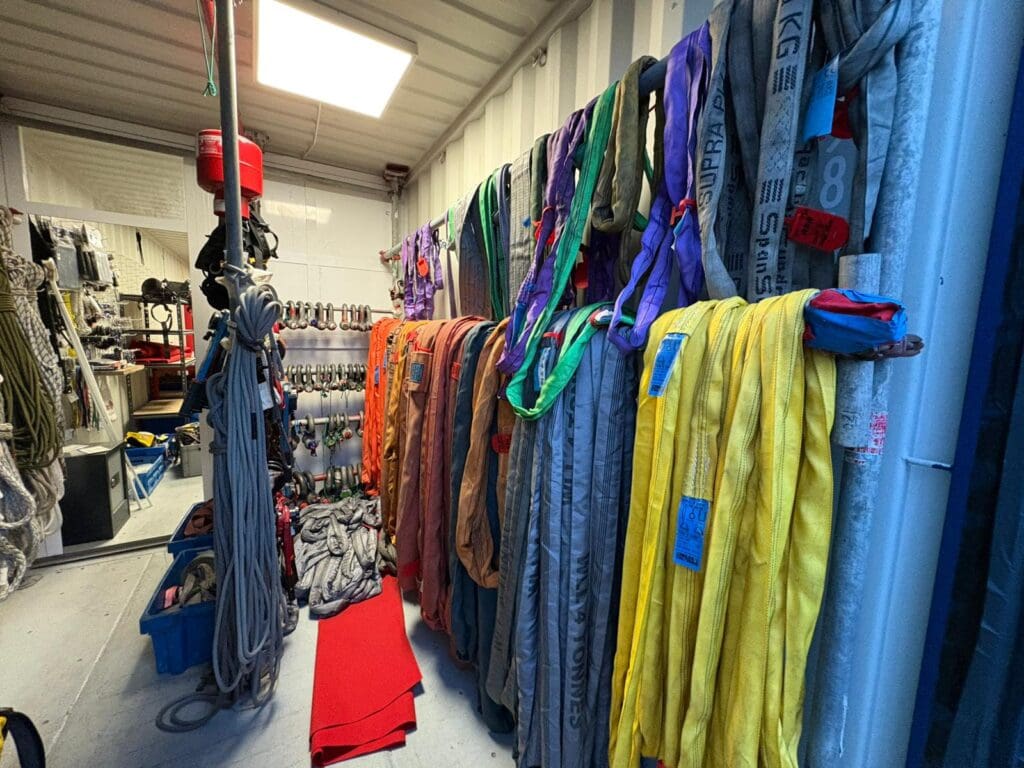
Routine Inspection: The First Line of Defence
Just as with any critical piece of yacht equipment, regular inspection of lifting slings is paramount. Before each use, a thorough visual and tactile check should be performed.
Check for wear and abrasion by carefully running your hands along the entire length of the sling’s webbing. Look for any signs of chafe, cuts, nicks, or fraying. These can be indicators of excessive friction or contact with sharp edges. Also, be vigilant for glazing, a sign of heat damage that compromises fibre integrity.
Inspect fittings and stitching closely. Pay attention to all end fittings, such as eyes, hooks, and any sewn sections. These areas typically endure the highest stress and are often the first to show signs of damage, distortion, or fatigue. Any weakening here renders the sling unsafe.
Assess for contamination. Slings exposed to oils, greases, solvents, or chemicals, particularly after work in the engine room or bilges, can suffer significant fibre degradation that may not be immediately visible. If a sling’s integrity is compromised by such contamination, it must be retired from service.
Protect from UV exposure and sharp edges. Ultraviolet radiation from sunlight can severely weaken synthetic sling materials over time. Store slings in dry, shaded locations when not in use. During lifting operations, always employ chafe protection, such as sleeves or pads, wherever the sling comes into contact with sharp or abrasive surfaces on the load or vessel.
By integrating these inspection routines into daily practice, crew can significantly extend the lifespan of their lifting gear and, more importantly, mitigate risks before they escalate.
Understanding Weight Loads and Lifting Sling Configurations
A critical aspect of safe lifting is a precise understanding of the weight being moved and the capacity of the slings in use. Every lifting sling has a Working Load Limit (WLL), which indicates the maximum load it can safely bear under specific conditions.
Verify the WLL by always checking the rating clearly marked on the sling’s tag or body before each lift. Never assume all slings have identical ratings, as capacities can vary based on material, construction, age, and any previous repairs.
Calculate the load accurately. Determine the actual mass of the item being lifted, whether it is a tender, a spare part, or a heavy spar section. Remember to include the weight of any additional lifting gear, such as shackles, master links, or spreader bars, in your total load calculation.
Sling configurations and their impact on WLL are equally important.
- Single Leg: This is the baseline configuration. The sling can safely lift its stated WLL.
- Basket Hitch: When a sling forms a ‘U’ shape around the load, often referred to as a basket hitch, it distributes the load across both legs. This configuration can typically support up to twice the WLL of a single-leg sling, provided the angle between the legs at the top is not too wide (ideally 90 degrees or less). As the angle widens, the effective WLL decreases due to increased tension.
- Choker Hitch: In a choker hitch, the sling wraps around the load and then one end passes through the eye of the other. This configuration tightens around the load as tension is applied, but it also significantly reduces the sling’s effective WLL, often to about 80 per cent of its single-leg capacity. Choker hitches also introduce greater localized stress and wear points on the sling.
The angle of lift is a crucial factor. The wider the angle between the sling legs at the lifting point, the greater the tension exerted on each individual leg. A seemingly small increase in angle can drastically increase the stress on the slings, potentially doubling or even tripling the force applied to them. Always consult standard lifting charts or seek expert guidance if you are uncertain about angle factors. It is prudent to choose larger capacity gear to ensure a comfortable safety margin.
Dynamic load factors must also be considered. On a yacht, particularly at sea or in variable weather conditions, static weight calculations are not enough. Vessel movement, wave action, and sudden changes in acceleration during a lift create dynamic loads that can momentarily exceed static weights. Always factor in a generous safety margin to account for these unpredictable forces.
A Culture of Safety
Effective sling management is not just about following rules; it is about cultivating a culture of safety. Every lift, whether a routine operation or an emergency, should begin with a thorough brief, a meticulous check of the gear, and a deep respect for the limitations of all equipment involved.
By embedding these practices into every aspect of deck operations, yacht crew ensure that all lifting tasks are performed safely, smoothly, and without incident. This commitment to detail safeguards both the crew and the longevity of the yacht itself.
If desired, RSB Rigging can assist with training and advice on sling inspection and lifting procedures to help crew uphold the highest standards of safety.


