
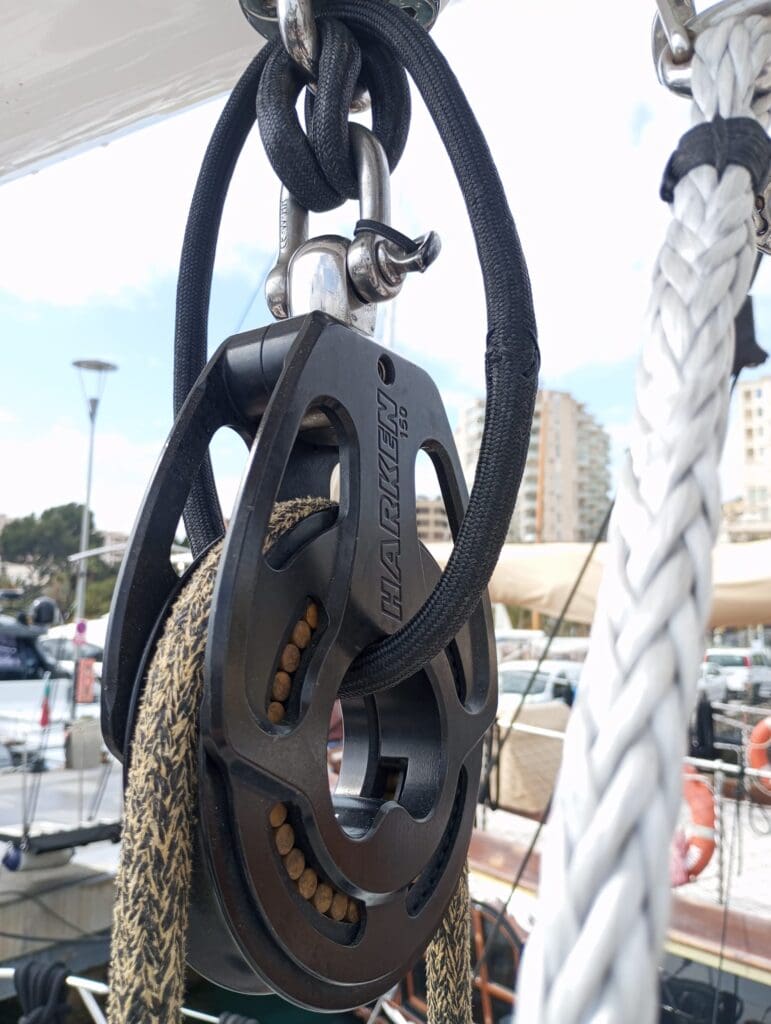
Loops and strops are among the most critical yet often overlooked components aboard a sailing yacht. These seemingly simple lengths of rope or webbing play a vital role in everything from attaching blocks and securing sails to acting as soft shackles or emergency lashings. Their reliability is not just a matter of convenience-it’s a matter of safety, especially when the yacht is under sail and loads can spike suddenly and dramatically.
Why Proper Care and Inspection Matter
Every sailor knows that a chain is only as strong as its weakest link. In many cases, that “link” is a loop or strop. Under load, a failed strop can cause equipment to break free, damage to sails and/or rigging, and could result in injuries. For this reason, it is essential to:
- Inspect regularly: Check all loops and strops for signs of wear, such as chafing of covers, flattening due to overloading, or broken fibres. Pay special attention to areas that see the most abrasion or UV exposure.
- Replace proactively: Don’t wait for visible damage to become a problem. If a strop looks tired or you’re unsure of its history, replace it. The cost of a new strop is negligible compared to the risk of failure at sea.
- Store spares: Always have spare loops and strops on board, properly spliced and ready to use. Emergencies rarely happen at convenient times, and a well-prepared sailor can quickly swap out a damaged strop without compromising safety or performance.
- Use proper splicing techniques: Professionally spliced loops and strops retain much more of the rope’s original strength compared to knots or makeshift lashings. If you splice your own, follow best practices and double-check your work.
- Safety first: Strops should be marked with their safe working loads. We suggest colour coding them to correspond with safe working loads for each piece of equipment. For example, in the event of an emergency it is easy to distinguish between strops/loops that look similar but have different safe working loads.
The Reality of Degradation
Even with careful maintenance, all ropes degrade over time. Loops and strops are especially vulnerable because they are often exposed to the harshest elements: sun, salt, load/unload, and abrasion. UV exposure weakens fibres, while mechanical wear can cause internal damage that may not be visible due to the outer cover, and not obvious until a failure occurs. This is why regular inspection and timely replacement are so important.
Choosing the Right Material: The Dyneema® Factor
Given these harsh conditions, it’s no surprise that sailors have turned to advanced materials like Dyneema® for loops and strops. Dyneema® is prized for its exceptional strength-to-weight ratio, resistance to stretch and rot, and its ability to withstand the rigours of the marine environment far better than many traditional fibres. However, while Dyneema® excels in performance and longevity, it brings its own set of environmental challenges.
When Dyneema® reaches the end of its useful life, it does not break down quickly. Much like a plastic bottle cap, it can persist in the environment for hundreds of years. If not disposed of responsibly, it can eventually degrade into microplastics, contributing to the growing issue of marine pollution.
A More Sustainable Approach: Bio-Based Dyneema®
Recognising this challenge, the industry has made significant strides in improving the sustainability of Dyneema®. Increasingly, rope manufacturers are sourcing Dyneema® products using renewable, sustainable feedstock (a waste byproduct of the wood industry-instead of oil). This bio-based Dyneema® is produced using largely renewable energy, which further reduces its environmental impact.
- Lower carbon footprint: Bio-based Dyneema® emits significantly less CO₂ during production compared to conventional HMPE fibres.
- Renewable resources: Utilising wood industry byproducts supports a circular economy and reduces dependence on fossil fuels.
- Certified supply chain: The entire process is ISCC certified, ensuring sustainability and traceability.
In Summary
Loops and strops are small items with a big impact on safety and performance at sea. Taking care of them-through regular inspection, timely replacement, and carrying properly spliced spares-is not just good seamanship, it’s essential for the safety of your crew and vessel. While the environmental impact of synthetic fibres like Dyneema® remains a challenge, choosing bio-based, sustainably produced Dyneema® is a positive step forward. As sailors, we can protect both our boats and our oceans by making informed, responsible choices.
Safe sailing, and remember: check your strops before you need them!
For more information about Maffioli’s Bio-based Dyneema®, please see the links below:
Gottifredi Maffioli’s commitment to a lower impact on the environment


