
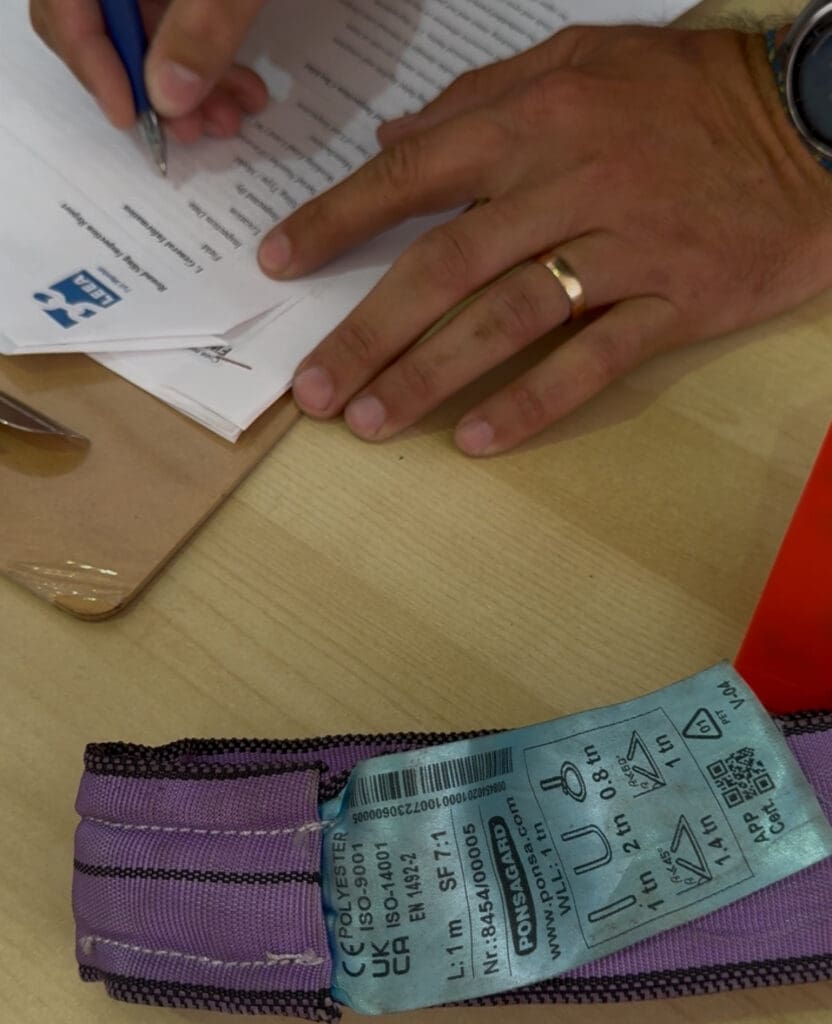
Captains and Crew are responsible for ensuring that every lifting operation is safe, compliant, and properly documented. To achieve this, it is essential to understand what to ask suppliers and what to check on each lifting accessory before use. Under LOLER and LEEA, all lifting accessories, including those made from synthetic materials such as Dyneema, must be correctly labelled, certified, and traceable.
Definition and Scope for Lifting Accessory Labelling and Certification
LOLER defines a lifting accessory as any equipment used to attach a load to a lifting machine. This includes shackles, slings, bridles, hooks, and blocks. Synthetic lifting gear, such as Dyneema or polyester slings, is increasingly used aboard yachts for its strength and weight advantages. These materials are subject to the same requirements as metal fittings and must meet full regulatory and certification standards.
Labelling Requirements
Each lifting accessory must be clearly and permanently marked so that its safe capacity, origin, and certification can be verified. The label or tag should include:
- The Working Load Limit (WLL), with leg angles where applicable
- The manufacturer’s name or logo
- A serial number or batch identification code
- The year of manufacture
- Any required CE or UKCA mark
Labels must be durable and legible. If a label is missing or damaged, the accessory must not be used until verified or relabelled by the manufacturer or a competent testing body.
Lifting Accessory Certification and Examination
No lifting accessory should be placed into service without a current certificate of thorough examination. Under LOLER, this certification is required:
- Before first use
- After any alteration or repair
- At least every six months for accessories in regular use, or every twelve months for those used less frequently
LEEA guidance adds that manufacturers should include proof load test data, usually twice the Working Load Limit for terminations on composite slings, confirming that each item has been correctly tested before release.
Documentation and Traceability
All lifting gear must have full traceability through its accompanying documentation. This allows the user to confirm that the product supplied matches the one tested and certified. Documentation should include:
- A Declaration of Conformity from the manufacturer
- Inspection or test certificates with examination details and approval
- Traceability records for the rope material and termination method
- Manufacturer instructions covering correct use and inspection intervals
This documentation must be retained and available for reference throughout the service life of the accessory.
What Captains and Crew Should Check
When receiving or inspecting lifting gear, Captains and Crew should verify that:
- The label is complete and legible
- The item is certified and within its inspection period
- Documentation is accurate and consistent with the label information
If any of these checks are unclear, the accessory should not be used until confirmed by the supplier. By understanding these requirements, crew can ensure that all lifting equipment on board is compliant, traceable, and ready for safe operation.


